

What are the “Cunard Queens?”
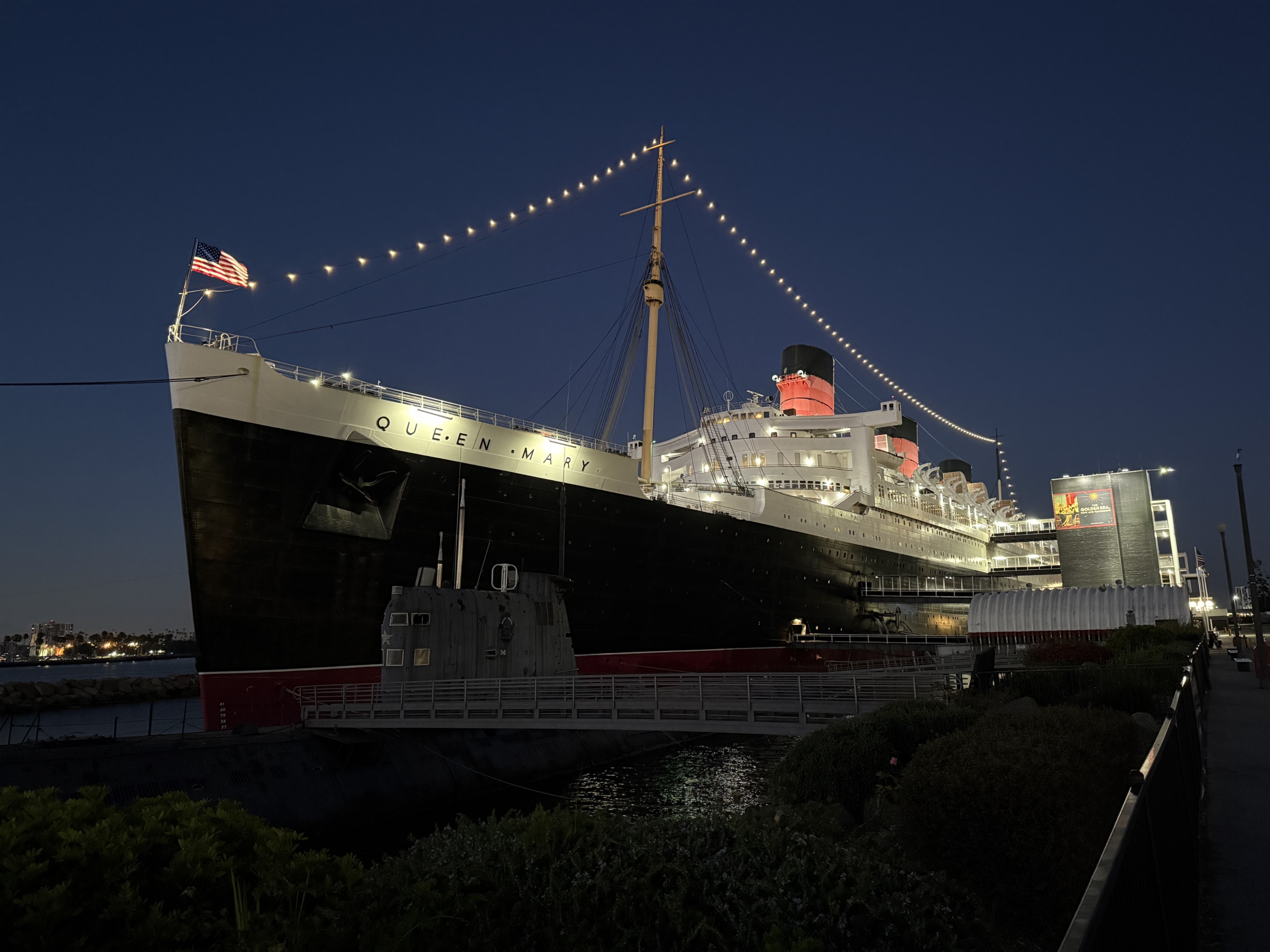
There have been Eight Cunard ships named for Queens of Great Britain or the United Kingdom since Cunard commenced service. And from the 1920s through to the 2000s, the term Queen was reserved for Ships of State.
These vessels included Queen Mary, Queen Elizabeth, QE2 and QM2. In addition, Cunard acquired the Imperator after World War I. They renamed her Berengaria, after the Queen Consort of Richard I. She became the flagship and she too held Ship of State status. Each one of these ships were true Ocean Liners, and were designed to be unique, special ships, unlike anything else at sea.
Are Cunard’s Queens Created Equal?
In short: No. Cunard’s Queens are not homogeneous. They were built and operated at different times, for different purposes and they hold very different symbolic and emotional ties with the public.
Today Cunard operate four ships that carry the Queen prefix ahead of their name.
Of these ships, only one is an Ocean Liner, Queen Mary 2. The other three ships, Queen Victoria, Queen Elizabeth and Queen Anne are cruise ships.
And unlike the previous Queens, all of which were custom designed for a specific transatlantic purpose, Cunard’s current cruising Queens are based off Holland America Line (HAL) hulls.
Queen Victoria and Queen Elizabeth are Vista-class cruise ships, created and modified from the HAL design. Queen Anne is a lengthened Pinnacle-class ship, also a HAL design.
Now there is nothing wrong with cruise ships. Cunard have operated many fine cruise ships over the years. Royal Viking Sun, Sea Goddess I and Sea Goddess II, Cunard Countess, Cunard Princess… the list goes on.
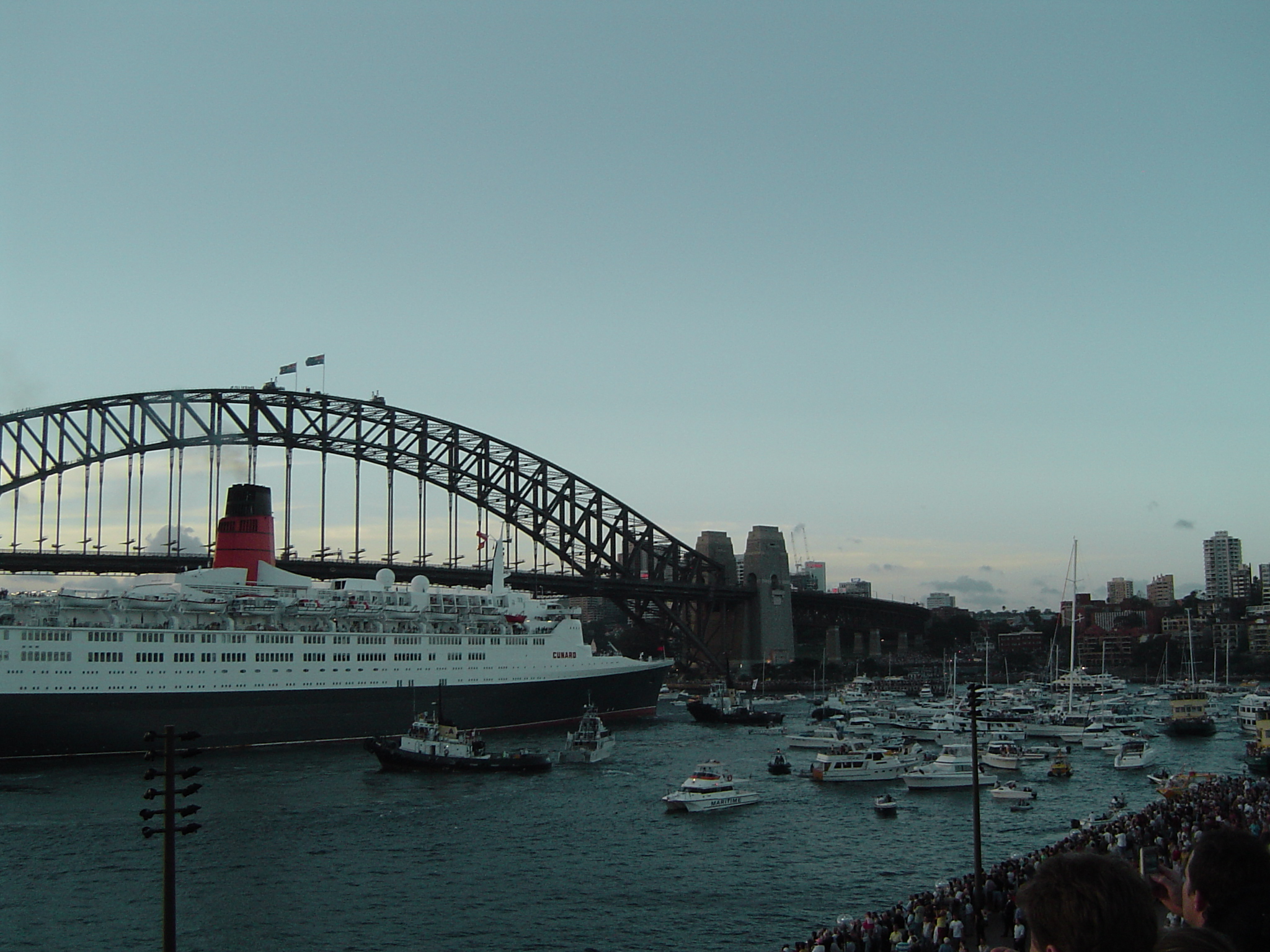
But there are significant differences in the design, appearance, ambiance and purpose of the three newest Cunard Queens compared to the original liners that wore the Queen name.
The first five Queens were built for a transportation purpose.
They were built to liner specifications. With thicker hulls they were stronger. And with a timetable to maintain, they were faster than their modern day counterparts.
And being both registered and home ported in the United Kingdom, the original Queens signified an enduring connection between Cunard Line and the British people.
The name Queen is important in Cunard lore. And it was originally chosen to signify the importance of the scale, size and importance of the ships.
Who are the Cunard Queens named after?
Contrary to what you might have read, the Cunard Queens are not all named after Queen Regnants. In fact, most of them are named after Queen Consorts. There have been 8 Cunard ships named for Queens of England, Great Britain or the United Kingdom. They are:
- Berengaria was named for Berengaria, Queen Consort of Richard I.
- Queen Mary was named for Mary of Teck, Queen Consort of George V. HM. Queen Mary christened the ship in 1934.
- Queen Elizabeth was named for Elizabeth Bowes-Lyon, Queen Consort of George VI. HM. Queen Elizabeth christened the ship in 1938.
- Queen Elizabeth 2 was named “Queen Elizabeth the Second” by HM. Queen Elizabeth II in 1967. It is widely agreed that the ship was to be named Queen Elizabeth after the 1938-built liner, but HM. Queen Elizabeth II personally altered the title. Cunard later agreed with Buckingham Palace to use the numeral ‘2’ to style their ship’s name.
- Queen Mary 2 is named after the first RMS Queen Mary, and is therefore named for Mary of Teck.
- Queen Victoria is named after HM Queen Victoria who reigned from 1837 to 1901.
- Queen Elizabeth: The 2010-built Queen Elizabeth is named after the first RMS. Queen Elizabeth, and therefore is named for Elizabeth Bowes-Lyon, though the ship also honors Queen Elizabeth II.
- Queen Anne: Is named after HM Queen Anne of Great Britain, who reigned from 1702 to 1714. Many felt like this was an odd choice, given how long ago Queen Anne reigned.
The Queens Custom Prints
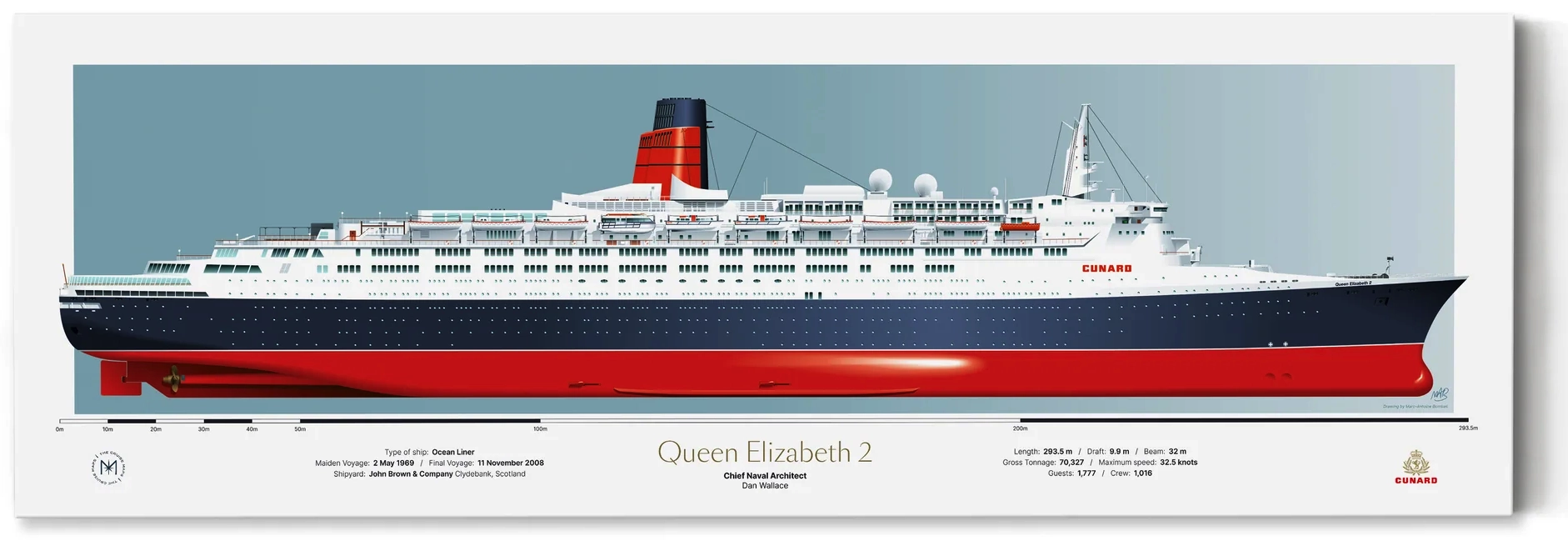
This new range of Custom Print from The Cruise Maps is created in partnership with Cunard and marine illustrator Marc-Antoine Bombail. It is a complete collection of seven scale portraits spans 90 years of Cunard history, from Queen Mary (1936) to Queen Anne (2024).
We’ve known Marc-Antoine for decades and have always admired his wonderful artworks. We are proud to offer a 10% discount code in affiliation with The Cruise Maps.
Simply use the code “ChrisFrameOfficial” at check out. Browse the collection here.
Note: This is an affiliate code, meaning if you buy these prints you get a 10% discount and we get a small commission at no cost to you.

