

Cunard Hotels & Resorts
From the 1970s through the mid-1990s, Cunard ran some of the world’s most prestigious real estate. In 1971, the independent Cunard Line was purchased by the Trafalgar House Company. This marked the first time since 1839 that Cunard was not independently owned.
Trafalgar House merged its diverse leisure operations with Cunard’s maritime fleet to create the Cunard Trafalgar Hotels division. The hotels division expanded during the 1970s and 1980s to include some very prestigious properties.
United Kingdom
-
The Ritz Hotel, London: The crown jewel of the portfolio, managed by Cunard from 1976 to 1995.
-
The Stafford, London: A prestigious luxury hotel in St. James’s.
-
Hotel Bristol, London: Located on Piccadilly, near the Ritz.
-
The London International: A large, modern property in London.
United States
-
The Watergate Hotel, Washington D.C.: The very same property that was involved with the Nixon scandal. Cunard operated this infamous and historic property.
-
The Rittenhouse, Philadelphia: Part of the luxury urban portfolio.
-
Properties in New York City: Various management interests and hotel operations were maintained in the city.
Caribbean & International Resorts
-
Cunard La Toc & La Toc Suites, St. Lucia: The centerpiece of the “Sail and Stay” program, featuring a golf course and private beach.
-
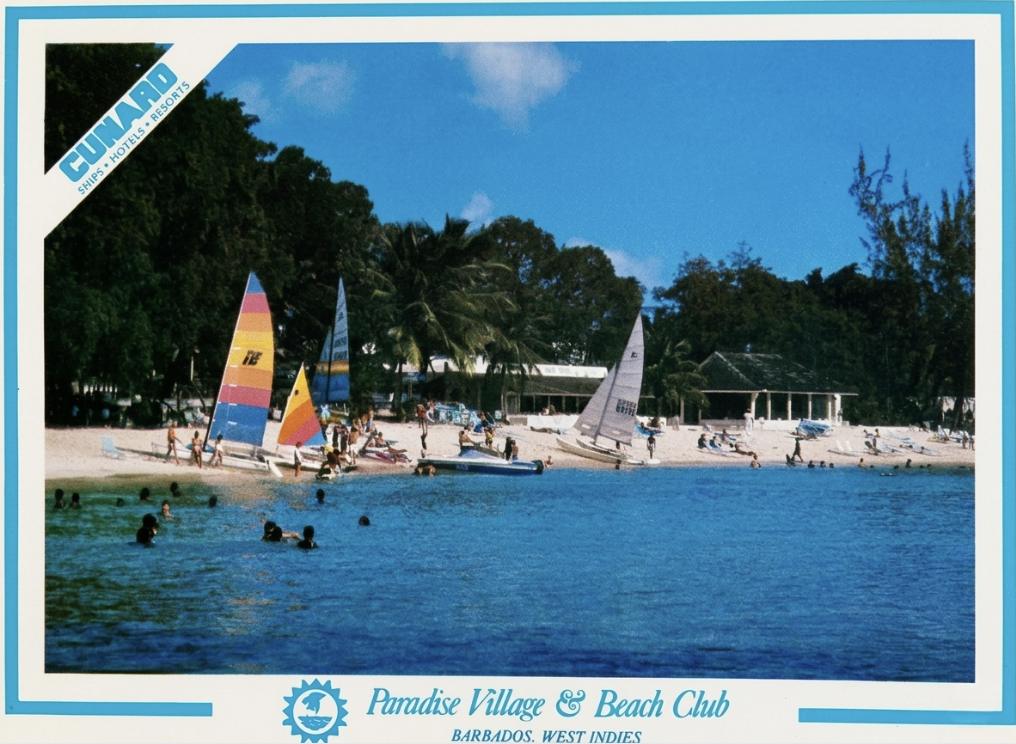
Paradise Beach Hotel, Barbados: A key resort for passengers sailing on the Cunard Countess.
-
Mallard’s Beach-Hyatt, Jamaica: Operated as part of the Caribbean resort network.
Cunard’s “Sail & Stay” Offering
By the 1980s, the division was renamed Cunard Hotels and Resorts and pioneered the “Sail and Stay” concept.
These offerings allowed guests to combine a week at sea with a week at a luxury shore-side resort, such as the stunning Cunard La Toc in St. Lucia. Passengers from the Cunard Countess and Cunard Princess would spend days ashore enjoying white-glove service and buffets that mirrored the onboard experience. Sadly, by 1995, the landscape shifted. Facing financial pressure, Trafalgar House divested its interests. The division was folded, and the properties were on-sold to international groups.

